


%20(1).png)
Length Of Development
11th March 2024 - 17th May 2024
Genre
Driving
Software
UE5, GitHub, Photoshop, JIRA, Word, Excel, Teams, Blender
Trailer & Walkthrough
Project Overview
Highway Code is an arcade-like, chaotic two-player 1930s mafia themed delivery driving game and the main objective is to out-deliver the other player. It draws inspirations from Crazy Taxi and The Simpsons: Hit & Run.
My responsibilities included designing core gameplay systems such as the game end conditions, the three Cs, the world manager, the world states and the power-ups.
Key Contributions


-
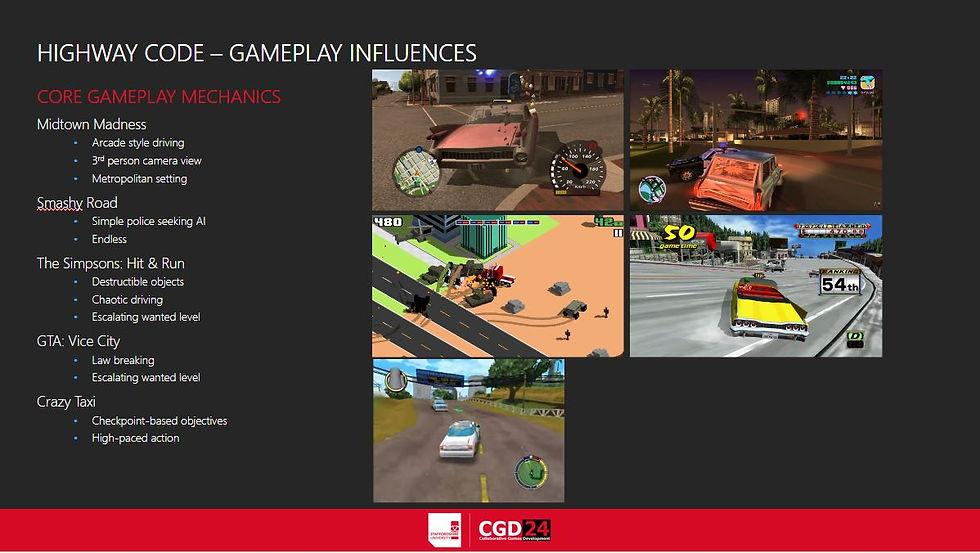
I contributed to gameplay influences for the core gameplay mechanics and the core game loop.
-
I created research images of some of the most important design features of the game (navigation, elevation, police behaviour, power up items) - I looked into games that had approaches that were varied from one another and were reputable.
Design Considerations


-
The camera and vehicle diagrams were made with the research I done into both how they work in popular arcade-like driving games (Crazy Taxi, Midtown Madness) and how players felt about them (Reddit, gaming forums).
-
The controls altered over time due to a combination of user feedback and changes in the direction of the game.
Camera, Character & Controls

-
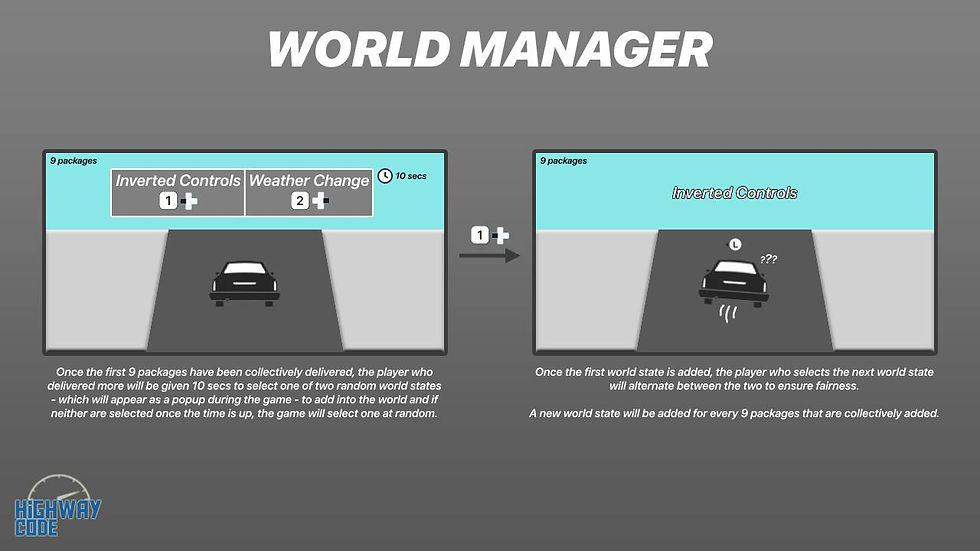
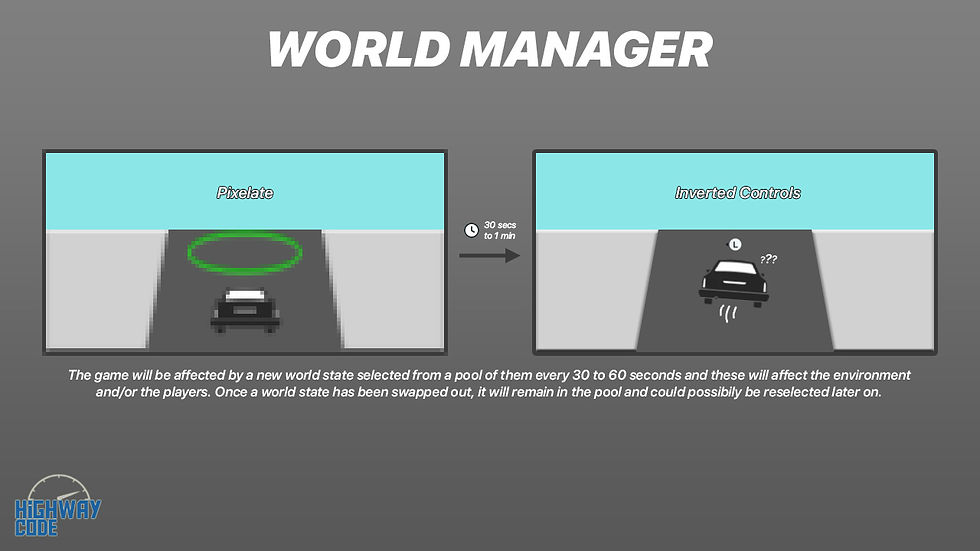
The function of the world manager changed over time mainly due to player feedback.
-
This also affected the world states with many of them either being converted into power-ups or scrapped altogether. Some that remained include exploding roadworks, falling bombs and inverted controls due to the positive feedback they received during playtesting.


-
I implemented most of the power-ups the design team came up with into Unreal.
-
I made the models for the boot and hook power-ups in Blender.
-
I also used material blueprints for the smoke screen and flash bang power ups.
-
Rocket League was a source for some of the power-ups I came up with (boot, hook, power hit).
Power Ups Implementation


-
I volunteered to make the shader with the aim of enhancing the game's 1930s art style.
-
I combined different material instances to help achieve this desired effect.
-
Cuphead was a major inspiration for this - particularly the grainy effect it has throughout the game.
Shader Implementation


-
I implemented a UI system that could detect both controller and keyboard & mouse inputs.
-
This was a solution we felt best addressed the issue of some players wanting to use a controller to play but being unable to use it in the menus that didn't negatively affect the keyboard & mouse players.
Controller Inputs for Menus
-
This video showcases the UI system - when the inactive buttons go transparent it's the controller in use and when they're all opaque it's keyboard and mouse.
-
I was unable to get this system fully functioning on time as there was a bug with the controller inputs that I couldn't fix.
Post-Mortem
What went well?
-
I took on my first leadership role, effectively coordinating between design, production and technical departments.
-
I maintained strong team chemistry that helped contribute to a cohesive and enjoyable final game experience.
-
I produced high-quality design work, implementing several key gameplay systems and mechanics that defined the game’s feel.
What didn't go well?
-
I encountered communication breakdowns and conflicts within the design team, leading to a change in leadership roles.
-
I struggled with task management and Jira upkeep, particularly during periods of maintenance issues.
-
I faced challenges adapting to frequent project changes, which occasionally disrupted workflow and planning.
What did I learn?
-
How to lead a design team effectively, managing communication and collaboration across multiple disciplines.
-
The importance of consistent task management and maintaining structure even during technical or organizational setbacks.
-
How to remain adaptable and solution-focused when navigating shifting project goals and interpersonal challenges.